
Fear of career change: why you stay even when you're unhappy at work
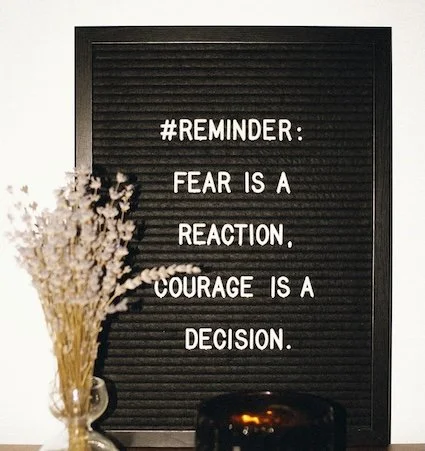
You wake up in the morning and there it is. Again. That feeling. You know something isn't right. Not since yesterday. For months now. Maybe years.
And still you go. You sit down at your desk, open your inbox, and that thought creeps in: What am I actually doing here?
I've been there myself. Years in a job that felt wrong and I stayed anyway. I told myself it was too late to change. That I was too old. By the way, this is a common misconception that holds you back – the idea that you’re too old. If that’s what you think, you’ll find out here why you’re wrong.
That the job wasn't that bad. But somewhere deep down I knew: that was a lie I was telling myself. If you recognise yourself in these lines, this article is for you. Not because I'm going to tell you to hand in your notice tomorrow. But because I understand why fear of change can leave you completely paralysed.
Why we Stay in jobs we hate. The psychology behind it
Have you ever been in a relationship where you knew, deep down: this isn't what I want. I should end it. And yet you stayed. Because you were afraid of being alone. Because you thought: well, something is better than nothing. Because ending it would have meant making a decision, letting go of something familiar – even if that familiar thing wasn't making you happy.
Now back to your job. You know you want out. But changing requires courage, decisions, actual action. And you feel frozen. So you grit your teeth. You put up with the stress, the bad atmosphere, the difficult colleagues, the exhausting manager, the hours. Not because any of that is okay with you – but because the question of what you'd actually do instead feels completely overwhelming. Because right now, change costs more energy than you have to spare.
And behind all of that is usually one thing: fear of change.
Familiar misery is strangely comfortable. That sounds paradoxical, but it's true. The wrong job, the wrong tasks, the wrong environment at least it's known. You know what to expect each morning. You know the routines, the people, the small rituals. And our brain – that ancient, evolutionarily wired brain – loves the familiar. Familiar means safe. Unknown means danger.
The problem is: as long as the familiar misery isn't screaming loudly enough, you stay. Not because you're a coward. But because change takes real energy, and uncertainty feels like a free fall with no ground in sight.
“Change is hard at the beginning, messy in the middle, and gorgeous at the end.”
The real reason you're afraid of changing careers (It's not what you think)
Our brains are literally wired to weight losses more heavily than gains. Psychologists call this loss aversion. Here's an example I find pretty spot-on: imagine you find 50 euros on the street. You're pleased, pocket the money, walk on. Now imagine reaching into your jacket pocket that evening and the 50 euros are gone. The frustration you feel is almost certainly greater than the joy you felt finding it that morning.
It's exactly the same with changing jobs. The prospect of losing something secure – the salary, the routine, the status – weighs heavier than the hope of something better. And then there's that one sentence that makes everything even harder: I don't even know what I actually want.
J.K. Rowling was 30 years old, divorced, a single mother, clinically depressed, and living on state support. It was at this lowest point that she started writing. She sent the Harry Potter manuscript to twelve publishers. All twelve rejected it. Every single one. And she sent it out again anyway. A year later, she got the green light. Today the series is a global phenomenon.
Her story isn't about simply pushing through – you hear that advice enough already, and that's not the point here. It shows something else: when you believe in yourself and keep going, doors do eventually open. And that setbacks don't have to define you.
“I learned that courage was not the absence of fear, but the triumph over it.”
– Nelson Mandela
How to leave your Comfort zone when you don't know where you're going
Growth happens outside your comfort zone. You've heard that a hundred times. On Instagram, in motivational calendars. And yes, it's true. But it tells you where growth happens – not how to get there. Especially not when you're overwhelmed, exhausted, and don't even know which direction you're supposed to be heading.
Comfort zone sounds so cosy. But it often isn't. It's just familiar. And familiar feels safer – even when it means waking up every Monday with a knot in your stomach, grinding through the working day feeling frustrated, and no longer seeing any meaning in what you do.
The really difficult thing about the comfort zone isn't that you don't know you should leave. It's the uncertainty on the other side. What's out there? Who am I outside of this role I've been playing for so long? What if I make the wrong decision?
“We must be willing to let go of the life we planned so as to find the life that is waiting for us.”
– Joseph Campbell
How to overcome fear of career change. One step at a time
Most people interpret fear as a stop sign. As the feeling that says: not yet, not now, maybe later when you feel ready.
But that feeling of readiness? It usually doesn't just arrive on its own. You don't wake up one morning and suddenly feel no fear about the next step. That's just not how it works.
Fear of the unknown is deeply wired into us. It kept our ancestors alive when real dangers were immediate and physical. But most of the things we're afraid of today aren't sabre-toothed tigers. They're uncomfortable conversations, the possibility of failure, and the uncertainty of not knowing how things will turn out. That's genuinely unpleasant – but rarely actually life-threatening.
What fear of professional change usually signals: that something truly matters to you. That you care about the outcome. That this isn't some abstract idea you're just playing with – but something you honestly, really want. That's actually pretty good news.
The goal isn't to get rid of the fear. The goal is to stop letting it make all your decisions. To let it be there and move forward anyway.
“Feel the fear and do it anyway.”
– Susan Jeffers
Taking the leap: What burnout, the Camino and a rucksack teach us about new beginnings
Uncertainty feels so paralysing because it means losing control. As long as you stay in your job ( even a frustrating one ) you know what's coming. You know the processes, the routines, what to expect. That knowledge, however illusory, provides a sense of security.
Taking a step into the unknown means temporarily giving that up. And our brain doesn't think in "temporarily", but it thinks in worst-case scenarios.
Hape Kerkeling, one of Germany's most beloved entertainers, with decades on the country's biggest stages, collapses mid-performance in 2001. Burnout. His body simply gave out. His doctor prescribed what he was least capable of: stopping.
What he did next: he packed a rucksack – a far too heavy one, as he later wrote – and walked 800 kilometres alone along the Camino de Santiago through Spain. He had no real plan for what came after. He only knew he couldn't carry on the way he had been.
The book he wrote about it spent 100 weeks at number one on the bestseller list and sold over four million copies. But the interesting part of his story isn't the book's success. It's the moment before. The moment when he simply set off and started walking in the most literal sense of the word.
“If you want to fly, you have to give up the things that weigh you down.”
– Toni Morrison
How to change careers without having it all figured out
The biggest obstacle on the road to a new beginning isn't a missing idea, or missing time. (Although "I don't have time" is a favourite excuse as this article explores.) It's the sentence we keep telling ourselves: I don't even know what I want. So I can't start yet.
Very convenient, that logic. Because it neatly frees you from having to do anything at all.
Maybe you're someone who went straight from school into training or university without a gap. A year abroad, time to yourself that wasn't really an option. You wanted to earn money, get ahead. And so you've just kept pushing your career forward, without pause.
And then, at some point, in one of those quiet moments for instance in the car, in the shower, just before falling asleep that question surfaces: what if I took a completely different path? Maybe back then you didn't get a place studying what you actually wanted. Or you didn't think you were good enough. And that thought just won't go away.
But then you follow it through to the end and it terrifies you. Because until now, everything went to plan. You had security, your role, your path. And suddenly having no plan, not knowing what comes next that feels almost like failure.
Stefan Raab ( No worries if you are not from Germany and you might have no idea where this guy is. Let me tell you he is very famous in Germany). Anyway, he trained as a master butcher. Then five semesters of law. Then music producer, TV host, entertainer, and one of the most creative minds German television has ever seen. Nobody could have predicted that least of all him probably. And he walked his path. You can't plan your whole life in advance. But you can start moving. At your own pace.
You might not know what you want right now. That's genuinely okay. But you very likely already know what you no longer want. And that's not a bad place to start. That's actually pretty good.
“It's never too late to be what you might have been.”
– George Eliot
How to take the first step toward career change. Even without a clear direction
Do you know what the bravest thing you can do right now is? Admitting: I'm unhappy. I don't know how to move forward. And that's okay. And then deciding to change something.
As long as you keep pretending – pretending it's fine, pretending you've made peace with it – nothing will shift. The dissatisfaction doesn't get quieter. It gets louder. Until at some point it shows up physically: as exhaustion, as sleep problems, as that dull feeling that's just there every morning and doesn't have a name.
Change doesn't need a perfect starting point. It needs one honest moment and then one first step. Not ten. One.
“A journey of a thousand miles begins with a single step.”
– Laozi
Sometimes that first step is a conversation. With someone who listens. Who doesn't immediately hand out solutions. Who looks with you at what's really inside you – beyond job titles, salaries, and what others expect of you.
"“t's not the external circumstances that change a life, but the internal shifts that show up in life.”
– Wilma Thomalla
You're not too old. You're not too late. That's one of many stubborn myths.
Knowing you need to change is one thing. Actually moving through it is another. The in-between phase – where you've already let go of the old but haven't landed anywhere new yet – is where most people struggle most. If that's where you are right now, this piece on navigating change walks you through exactly that.
I offer a free initial conversation for people who know something needs to change, but don't yet know how or where. Click here to book an appointment. We look together at where you are right now and what might be possible. You don't have to figure this out alone. You're allowed to ask for support.